

Accessibility Accessibility icon
CONSULTATION (303) 951-5829
Accent Image
BOTOX May Help Reduce Scar Formation

BOTOX May Help Reduce Scar Formation

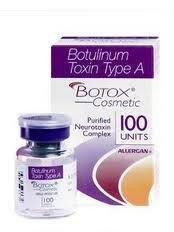
Botox Cosmetic

While most people know that BOTOX can help reduce lines and wrinkles, very few recognize the myriad of other uses for which BOTOX has proven effective.  Since its introduction into the medical community, this versatile product has shown promise for treating anything from bladder spasm to vocal cord issues to hemorrhoids.  According to a recent study published in the Journal of Plastic & Reconstructive Surgery, BOTOX might even prove effective for reducing the formation of scar tissue.

In this study, the authors looked at the effects of botulinum toxin Type A on differentiation of myofibroblasts from their fibroblast precursors.  These differentiated cells ultimately lead to the formation of scar tissue.  Therefore, by injecting BOTOX (or a BOTOX-like compound) directly into early scars thought to be prone to hypertrophic scar formation, we may actually be able to modulate this process and keep scar hypertrophy from occurring.

To read more on this novel use of botulinum toxin Type A, please CLICK HERE.

Thanks again for your continued support!  Let us know your feedback on this article and any others you would like to see us post.

Visualize your NEW LOOK in 3D NOW

START NOW
Natrelle® Breast Implants
IMPORTANT SAFETY INFORMATION

Breast implants are not lifetime devices. The longer patients have them, the greater the chance they will develop complications, which may require more surgery. Breast implants have been associated with a cancer of the immune system called breast implant–associated anaplastic large cell lymphoma (BIA-ALCL). Some patients have died from BIA-ALCL. Patients have also reported a variety of systemic symptoms such as joint pain, muscle aches, confusion, chronic fatigue, autoimmune diseases, and others.

Natrelle® Breast Implants are for breast augmentation and revision surgery in women at least 22 years old for silicone-filled implants and women at least 18 years old for saline-filled implants.

You should not get breast implants if you currently have an active infection, untreated breast cancer or precancer, or are pregnant or nursing. Tell your doctor about any conditions you have, any medications you are taking, and any planned cancer treatments. Breast implantation is likely not a one-time surgery.

Having implants removed and not replaced may lead to permanent cosmetic changes of the breasts. Breast implants may affect breastfeeding. Gel implants may rupture without symptoms, so periodic imaging after surgery is recommended.

Key complications are reoperation, implant removal, implant rupture, implant deflation with saline-filled implants, and severe capsular contracture.

Talk to your doctor for more information.

The use of Natrelle® Breast Implants is restricted to licensed physicians who provide information to patients about the risks and benefits of breast implant surgery.

Visualize your
NEW LOOK in 3D NOW!

Start now
START NOW
Natrelle® Breast Implants
IMPORTANT SAFETY INFORMATION

Breast implants are not lifetime devices. The longer patients have them, the greater the chance they will develop complications, which may require more surgery. Breast implants have been associated with a cancer of the immune system called breast implant–associated anaplastic large cell lymphoma (BIA-ALCL). Some patients have died from BIA-ALCL. Patients have also reported a variety of systemic symptoms such as joint pain, muscle aches, confusion, chronic fatigue, autoimmune diseases, and others.

Breast implants are not lifetime devices. The longer patients have them, the greater the chance they will develop complications, which may require more surgery. Breast implants have been associated with a cancer of the immune system called breast implant–associated anaplastic large cell lymphoma (BIA-ALCL). Some patients have died from BIA-ALCL. Patients have also reported a variety of systemic symptoms such as joint pain, muscle aches, confusion, chronic fatigue, autoimmune diseases, and others.

Breast implants are not lifetime devices. The longer patients have them, the greater the chance they will develop complications, which may require more surgery. Breast implants have been associated with a cancer of the immune system called breast implant–associated anaplastic large cell lymphoma (BIA-ALCL). Some patients have died from BIA-ALCL. Patients have also reported a variety of systemic symptoms such as joint pain, muscle aches, confusion, chronic fatigue, autoimmune diseases, and others.

Breast implants are not lifetime devices. The longer patients have them, the greater the chance they will develop complications, which may require more surgery. Breast implants have been associated with a cancer of the immune system called breast implant–associated anaplastic large cell lymphoma (BIA-ALCL). Some patients have died from BIA-ALCL. Patients have also reported a variety of systemic symptoms such as joint pain, muscle aches, confusion, chronic fatigue, autoimmune diseases, and others.