

April 6, 2015
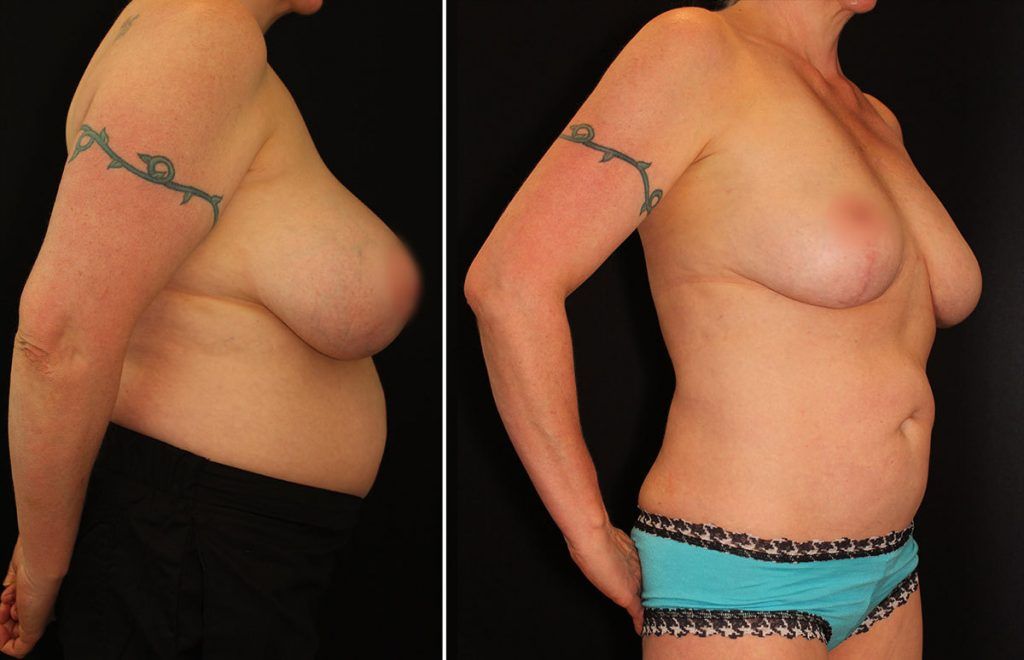
 As a Plastic Surgeon who specializes in breast enhancement, I see a number of patients each week who are interested in improving the appearance of their breasts. And while some of these women will be able to achieve great results with an augmentation alone, some will also require a lift to adjust their skin envelope and lift the nipple position over the breast mound. The ability to determine whether or not you need a lift can make all the difference in the world when it comes to the quality of result you can hope to achieve.
There are several factors that suggest you may need a lift. To determine if you are a candidate for a breast augmentation alone or a combination augmentation & lift, ask yourself the following:
- What is the quality of your breast skin? Do you have considerable laxity? If so, simply placing a reasonably sized implant will probably not help you achieve a good result. In this case, a lift will help tighten the skin envelope so that the breast itself can achieve the most optimal optimal shape and perkiness.
- Next, is your nipple position at or below the level of your breast fold? If the nipple is too low, simply placing an implant will lead to the appearance that your breast tissue is effectively falling off your breast mount and so a lift will be warranted.
- Finally, do you have any significant degree of asymmetry with respect to your nipple position? If one nipple is much lower than the other, a lift can correct this unevenness and produce a more symmetric result. Keep in mind, however, that most of us (men and women) are asymmetric and so a small amount of asymmetry may actually be acceptable. It really depends on what you prefer.
If any of these factors pertain to your breasts, chances are that you need a lift. But once you decide that a lift is necessary, is it possible to perform the lift at the same time as the augmentation?
 The answer to this question is that it may actually pertain less to the appearance of your breasts and more to the experience of your surgeon. When I first began practicing Plastic Surgery, the breast augmentation/lift combination was less commonly performed in a single stage. Many surgeons considered (and still do) this procedure to be among the most challenging procedures performed in Plastic Surgery and so many Surgeons will choose to stage the operation by first performing a lift, allowing you to heal for a few months, and then going back and performing the augmentation at a later date. And while staging a procedure is not necessarily a bad thing, it does increase the complexity for you in that what could have been a single staged procedure and a one-week healing period now turns into a two-staged procedure that is drawn out over a period of 3-6 months.
Having performed literally hundreds of these procedures in a single-stage, I am comfortable with this approach and prefer it for my patients. And while this may not be the best approach for every patient, for most it creates a more straightforward approach that gets everything done as quickly and effectively as possible.
If your Plastic Surgeon suggests staging your breast augmentation/lift, you should ask them why. There is nothing wrong with staging any procedure but it also may point to your surgeon’s level of comfort with breast surgery in general. Most Plastic Surgeons can achieve reasonable results with an augmentation alone. But when it comes to adding a breast lift, complexity of the procedure itself increases dramatically. And that is why many surgeons choose to stage the surgeries.
The more you know about your surgeon and their expertise, the more likely you are to achieve optimal results with any Plastic Surgery procedure. This is yet another example where knowledge is key and where you should be as informed as possible.
I hope this information is helpful and look forward to hearing your comments, questions, and insights. If you’d like to learn more, I encourage you to contact us at 303.708.8235 or email me directly at [email protected]
Be well!
You Might Also Like