
Accessibility Accessibility icon
CONSULTATION (303) 951-5829
Accent Image
How Old Is Too Old For a Breast Augmentation?

How Old Is Too Old For a Breast Augmentation?

December 9, 2010

As a Board Certified Denver Plastic Surgeon, I have seen the field of Cosmetic Surgery grow dramatically over the last several years as has its reach to the American consumer. Many men and women who previously would have not considered Cosmetic Surgery now see it as a routine part of their lives and something that is considered more of a maintenance than a luxury expenditure. And with that explosive growth has come the question of how old is too old.

In my Plastic Surgery practice, I am commonly asked just how old is too old to have a breast augmentation. And that is really a difficult question to answer. In my mind, age is less of a consideration than maturity of the patient and their underlying expectations. For many women, the appearance of their breasts plays a huge role in how they see themselves as a whole person. For those who have lost volume as a result of pregnancy or even simply from the aging process itself, their aged breasts represent a lack of proportion with the rest of their body. For these women, restoration of this lost volume and reshaping of their breasts can dramatically restore a sense of well-being, overall proportion, and enhanced well being.

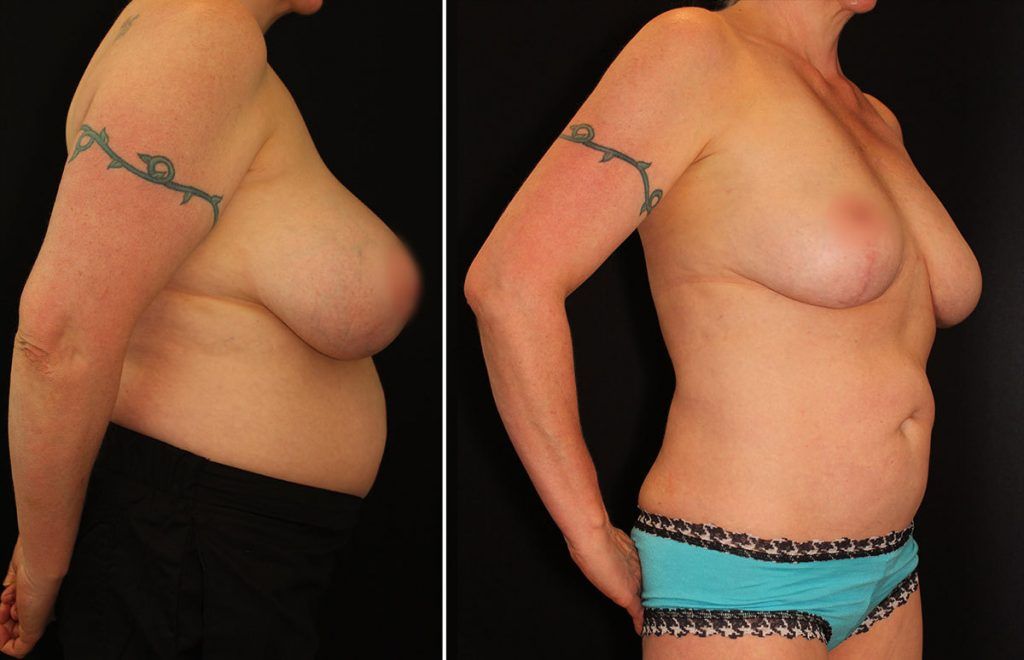
I am personally seeing more women in their 50’s and 60’s who are interested in changing the appearance of their breasts. Some of these women have been augmented earlier in life and now find themselves with droop or loss of volume as a result of the aging process. Others have developed firmness of the capsule around their implants (capsular contracture) and simply wish to restore a softer, more natural look and feel to their breasts. And others never had augmentation but realize that with an average life expectancy ranging into the 80’s and 90’s, they simply wish to improve their appearance knowing that they have many productive years ahead.

And so is this simply Madison Avenue telling women that they need to have implants to look attractive? Are they simply being manipulated by the latest trend? According to several respected experts such as Nancy Etcoff, it is actually the opposite. These women are proactively taking charge of their appearance and realize that a more youthful look may have far reaching benefits outside of the bedroom, into the boardroom, and beyond. Many studies have shown that how we see ourselves has a dramatic effect on our confidence and our ability to participate effectively in society and social situations.

Given that, I feel that the growing trend for breast enhancement among women in their 50’s, 60’s, and even 70’s is a positive one and one that is simply reflective of the new American woman and her ability to define and re-define herself on multiple levels.

Visualize your NEW LOOK in 3D NOW

START NOW
Natrelle® Breast Implants
IMPORTANT SAFETY INFORMATION

Breast implants are not lifetime devices. The longer patients have them, the greater the chance they will develop complications, which may require more surgery. Breast implants have been associated with a cancer of the immune system called breast implant–associated anaplastic large cell lymphoma (BIA-ALCL). Some patients have died from BIA-ALCL. Patients have also reported a variety of systemic symptoms such as joint pain, muscle aches, confusion, chronic fatigue, autoimmune diseases, and others.

Natrelle® Breast Implants are for breast augmentation and revision surgery in women at least 22 years old for silicone-filled implants and women at least 18 years old for saline-filled implants.

You should not get breast implants if you currently have an active infection, untreated breast cancer or precancer, or are pregnant or nursing. Tell your doctor about any conditions you have, any medications you are taking, and any planned cancer treatments. Breast implantation is likely not a one-time surgery.

Having implants removed and not replaced may lead to permanent cosmetic changes of the breasts. Breast implants may affect breastfeeding. Gel implants may rupture without symptoms, so periodic imaging after surgery is recommended.

Key complications are reoperation, implant removal, implant rupture, implant deflation with saline-filled implants, and severe capsular contracture.

Talk to your doctor for more information.

The use of Natrelle® Breast Implants is restricted to licensed physicians who provide information to patients about the risks and benefits of breast implant surgery.

Visualize your
NEW LOOK in 3D NOW!

Start now
START NOW
Natrelle® Breast Implants
IMPORTANT SAFETY INFORMATION

Breast implants are not lifetime devices. The longer patients have them, the greater the chance they will develop complications, which may require more surgery. Breast implants have been associated with a cancer of the immune system called breast implant–associated anaplastic large cell lymphoma (BIA-ALCL). Some patients have died from BIA-ALCL. Patients have also reported a variety of systemic symptoms such as joint pain, muscle aches, confusion, chronic fatigue, autoimmune diseases, and others.

Breast implants are not lifetime devices. The longer patients have them, the greater the chance they will develop complications, which may require more surgery. Breast implants have been associated with a cancer of the immune system called breast implant–associated anaplastic large cell lymphoma (BIA-ALCL). Some patients have died from BIA-ALCL. Patients have also reported a variety of systemic symptoms such as joint pain, muscle aches, confusion, chronic fatigue, autoimmune diseases, and others.

Breast implants are not lifetime devices. The longer patients have them, the greater the chance they will develop complications, which may require more surgery. Breast implants have been associated with a cancer of the immune system called breast implant–associated anaplastic large cell lymphoma (BIA-ALCL). Some patients have died from BIA-ALCL. Patients have also reported a variety of systemic symptoms such as joint pain, muscle aches, confusion, chronic fatigue, autoimmune diseases, and others.

Breast implants are not lifetime devices. The longer patients have them, the greater the chance they will develop complications, which may require more surgery. Breast implants have been associated with a cancer of the immune system called breast implant–associated anaplastic large cell lymphoma (BIA-ALCL). Some patients have died from BIA-ALCL. Patients have also reported a variety of systemic symptoms such as joint pain, muscle aches, confusion, chronic fatigue, autoimmune diseases, and others.